How to create high-converting Facebook ads in 2026.
How Do I Create High-Converting Facebook Ads in 2026?
High converting ads are built by leveraging creative testing, while also creating high quality ads that have the right message, for the right ICP.
In this article, I'll be covering how you come up with your target ICP example, the way I create problem statements that can be used at all levels of awareness, how I turn those into actual creatives, and finally how to test which creatives are working well and iterate off working strategies.
By the end, if you follow along, you will have a batch of 10-20 static image creatives, ready for an ad account, that can be iterated and tested easily. These will also be able to translate to new media formats, once they do well, such as videos.
Now lets actually fix your advertising.
Step 1: Define your ICP With Problems and Constraints, not Demographics.
For this example I am going to be using a hair care product that is designed specifically for Asian women between the ages of 25 and 35. This is how you should go about designing an ICP.
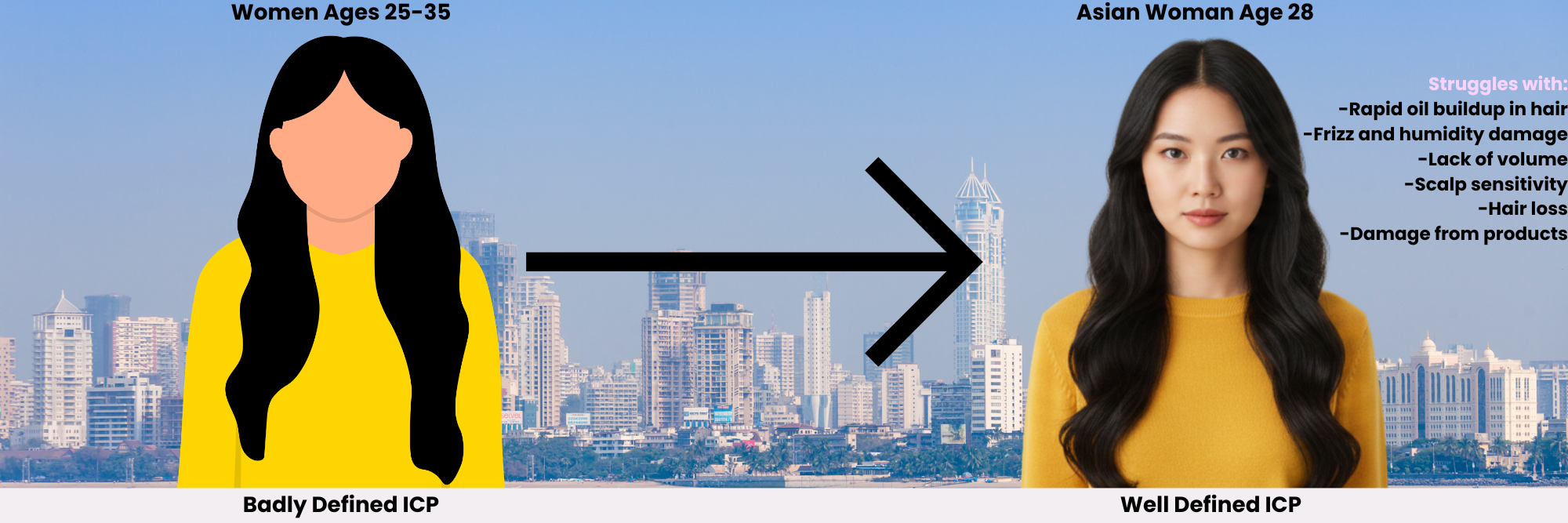
The idea here is that you list the emotions and problems that the target is experiencing, not just a description of who they are. Then, you can target ads to that audience using levels of awareness and the problems they are experiencing.
Not only does this make ad language target centered instead of brand centered, but it makes the process of developing creatives simpler.
If you are more advanced, you can include things like their current belief system, goals, and fears. This can help you educate the prospect using lead funnels later on.
Step 2: Clearly Define the Goal of the Advertisement.
When you are creating an advertisement you need to be able to measure progress. That requires understanding what metrics to look at, and what the advertising goal is. For awareness, it is likely you want to track views and interactions. For purchases, you just need to track ROAS. For leads, you may want to track lead quality based on average purchase value and CPA. You want to use SMART goals, which are specific, measurable, achievable, relevant, and time-bound. For example, instead of "increasing sales" you want to phrase that as "$5,000 worth of new revenue from first time buyers in the next 14 days with a maximum CPA of 18$."
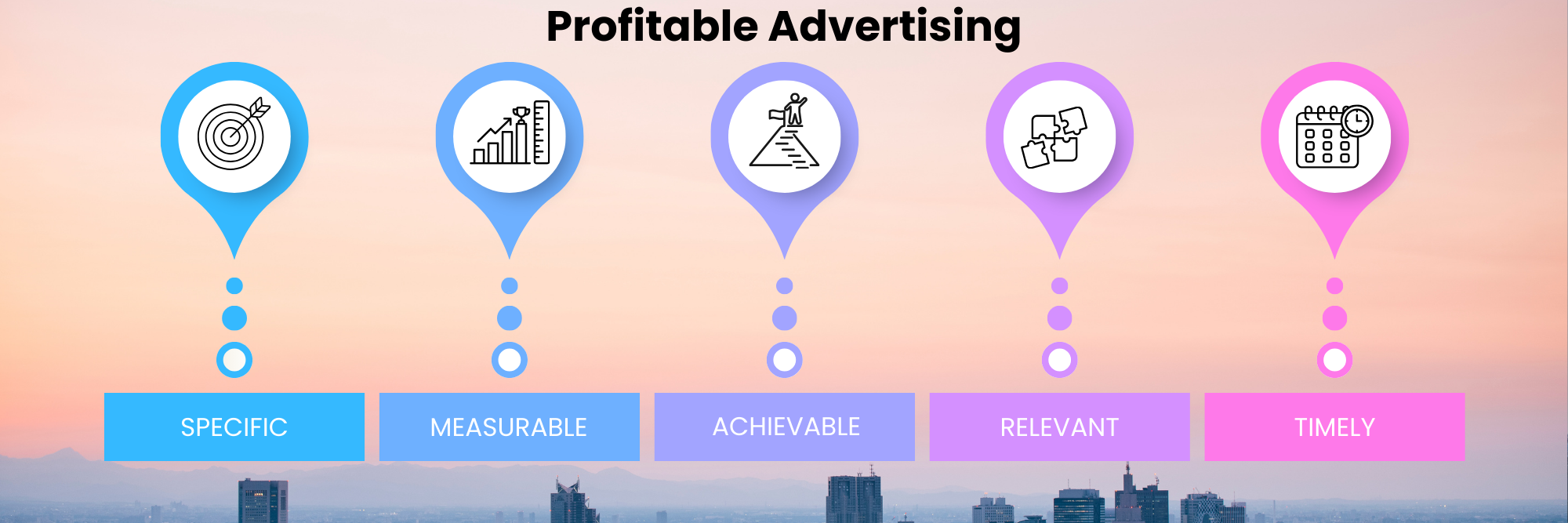
Targeting a specific goal allows you to setup your ad messages right, setup your campaign properly, and most importantly lets you test accurately so you can improve over time.
Step 3: Create Problem Statements, and Tailor them Across Levels of Awareness.
Lets go with the hair care brand again. Focusing on "damage from products" we know that the emotional state of the prospect is going to be fearful. They have experienced bad products in the past, and are very concerned. This means they are also product aware by default, but may not be aware of your product specifically. Let's go through the levels of awareness.
Note from the author: Some value statements work better at specific levels of awareness. Even if you do not end up using all levels, it is a good idea to practice framing each problem at all levels, to understand it better. This also may end up helping you realize you can advertise to a wider audience than you thought.
Unaware prospects do not know they have a problem. With this value statement this is a tricky thing to advertise, but I would do it like this: "Did you know some hair products can actually ruin your hair?" This is a curiosity ad, which would lead into a funnel landing page that describes the risk of being uninformed when purchasing hair care, then offers to sign up for a follow up sequence, where you can move them down the levels of awareness until you hit product aware.
Problem aware prospects do not know how to solve their problem. For this same value statement, you could say "There are hair care products designed for Asian hair." This doesn't clearly reference a solution, but it does target the fear of not having hair care products that are designed for them, which carry the risk of damage. This would lead to a funnel about how some products have a special serum designed to help with other issues Asians have with their hair.
Solution aware prospects do not know about your product specifically. For this value statement, you can now transition to "Us vs Them" advertising. I would likely run something like "you deserve better than {popular brand}" because it creates both curiosity and desire. I would run to a landing page about how that brand actually can damage your hair, and why yours is better for the specific ICP. Even if you do not want to call out a specific brand, you can be vague and allow imagery to do the talking. "You deserve better" with an image of someone scratching their head would also work.
Product aware prospects need a good reason to purchase now. For this value statement, you specifically want to give a reminder of the core value, and a reason to purchase. "Designed for Asian hair. 30% off until friday." This shows who it is for, the image should show the ICP, and the 30% time limited discount gives a reason to purchase now.
Note from the author: fully aware advertising is incredibly similar to product aware, the only difference is fully aware already wants your product, they just want urgency. Similar advertising, but you don't need a value statement, just urgency.
Step 4: Create a Template That you can Iterate Easily.
Your template should be simple to edit, have clear variables, and contrasting, bold text. You can use this to test messaging easily, and once you have a good understanding of your messaging, you can make the templates more complex.
The rule of thumb I use is to let the photo do most of the talking. Showcase the ICP experiencing the benefits or problem you are referencing, and use the text to clarify. Use less words based on the level of awareness depth.

Lets see how you can apply the messages you developed to this creative template. All you are doing is filling in the details you have already created.
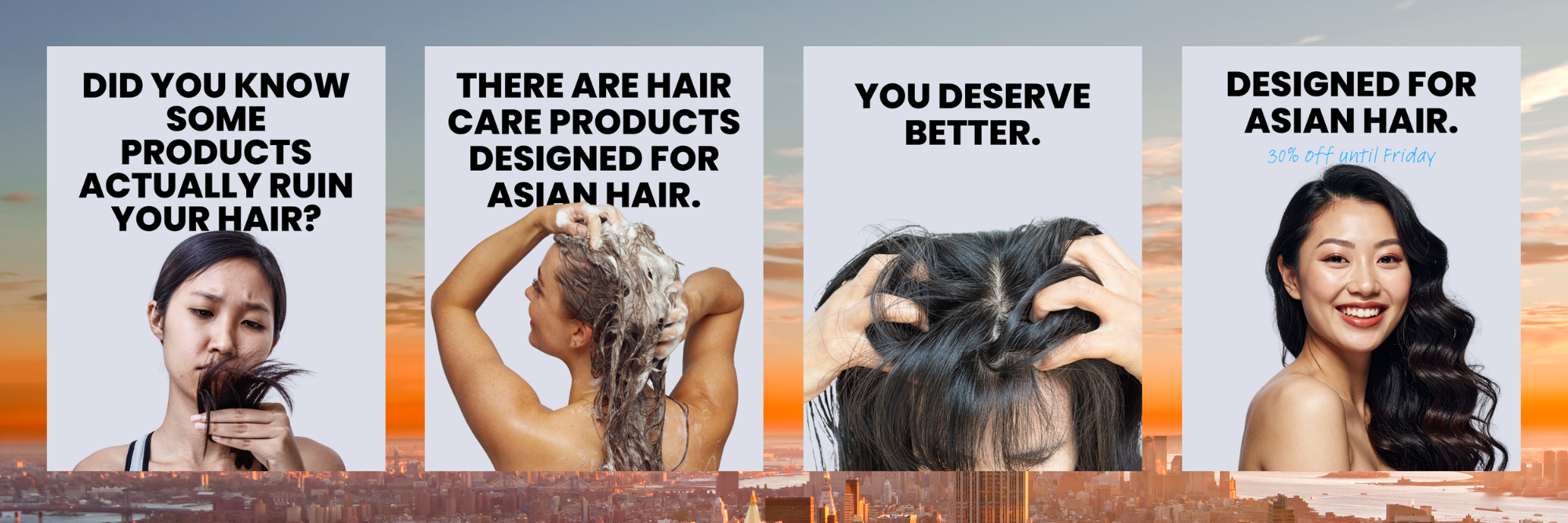
Each of these either target a problem, or a solution, and the image lines up with that. The text is sized accordingly, and nothing else is changed. This also makes it easier to know what is working. With a simplistic template you can test color, text, and imagery incredibly easily.
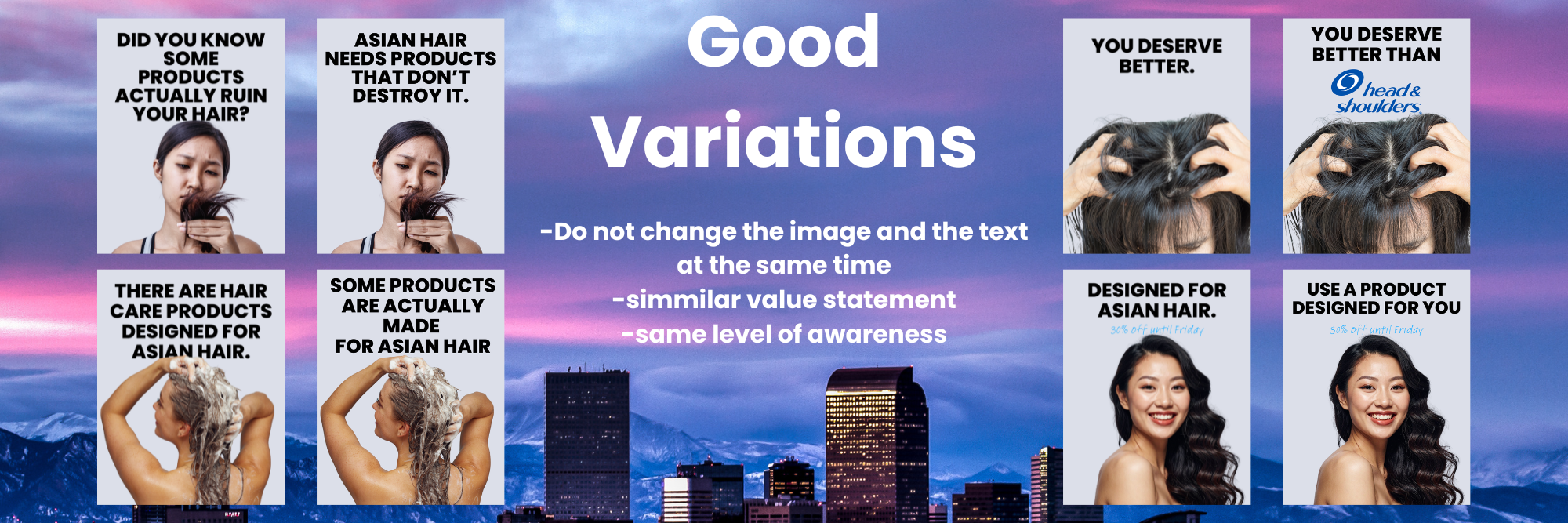
For those who want the best results, create at least one variation on the text of each ad. Call out the problem in a slightly different way. If you do this process with 2 problem statements, instead of just one, you will have 16+ different ads.
Step 5: Set up the Ad Test in Your Campaign.
The first step you want to take is only use one campaign and one ad set. You want to let Facebook handle the budget allocation from the campaign level, and have all the ads in the same group to feed data the fastest. The ad copy on the ad itself can do the targeting for you using Andromeda.
By using creatives that only edit one variable at a time, you can learn a lot from these tests. Lets say only the "you deserve better than head and shoulders" and the "designed for Asian hair" ads did well. You now know that your level of awareness is very low, and you need to run more ads for top of funnel content to perform.
You also learned that comparing to other products, by name, and specifically stating "Asian" performs better than if you use generic or vague wording.
Now you can make a new batch of ads, that follow those rules. Specifically, create a batch of ads that has the same creative template, but uses new messaging (the text on screen.) Repeat this process until you have capped out your ad spend, or you want to test new creative formats.
Step 6: Convert Static Images to UGC Video and Other Formats.
Once you know what messaging and visuals work the best for your audience, you want to convert into other ad formats, such as UGC video reviews. Here is how that works. The ad text becomes your hook. "Designed for Asian Hair" would turn into "This Product is Actually Designed Specifically for Asian Hair." Then, you take some of the benefits from your landing page, and turn them into the ad script, and run a CTA. The only critical part is making sure the creators you select match up with your ICP. If they don't, the ads will underperform.
Step 7: Let Me Do it all, For Free.
If you want me to handle all of your advertising, for free, by managing the campaigns, creating all the content, and all I do is take a piece of the profits at the end, fill out the form on our main website.