Cheap Product Ads That Still Convert - Tutorial
How to Make Product Ads Cheap (Without Sacrificing Performance)
Cheap ads can outperform expensive ones. Once you understand why, your whole approach to creative changes.
I've watched Shopify brands spend $8,000 on a polished video production — lighting crew, professional editor, agency fees — and get crushed in the auction by a founder talking into a phone on their back porch. The phone video won because it felt real. Audiences can tell the difference between something made to impress and something made to connect. That difference shows up directly in your cost per purchase.
This Article Has a Video Version!
This has the same information that was written by me, and I just filmed it. If you prefer to listen/watch, this is perfect.
Start With Your ICP
Before you film anything, get specific about who you're selling to. One person. Their job, their daily frustrations, the thing they want most right now.
For a DTC brand on Shopify, that might be: a 28-year-old woman running a small business from home, spending too much time on tasks she wants to hand off. What does she want? More time. What does your product give her? More time. Build the ad around that.
Write down:
Who your buyer is
The single biggest problem your product solves for them
What their life looks like after they buy
The script comes from that list. You're describing their problem, then showing them the way out through your product. That's the whole ad.
Match the Message to the Margin
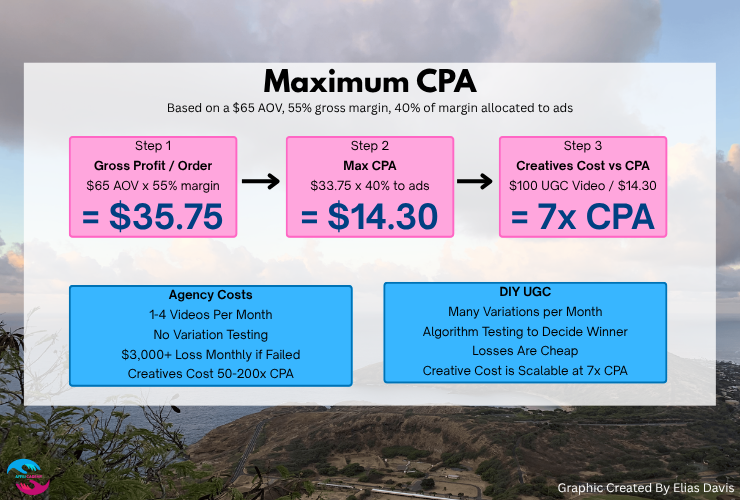
Your ad budget should reflect your margin structure. If you're dropshipping a $30 product with a $10 margin, a $500 UGC video from an agency will never pay off. If you're running a branded Shopify store with a $60 AOV and strong LTV, you have more room.
Figure out your maximum allowable CPA first. Take your average order value, multiply by your margin percentage, and decide how much of that you're willing to spend to acquire a customer. That number is your ceiling. Every creative decision flows from it.
For most ecommerce brands, that math points toward low-cost creative. A $100 UGC video that converts at a $25 CPA beats a $2,000 production that converts at $40 every time.
Produce in Volume
Film one message. Film it ten different ways.
One afternoon with a clear brief gives you eight to twelve variations. Change your shirt between takes. Move rooms. Go outside. Film in your car. What looks like ten separate assets costs you three hours and nothing else.
This matters because you can't predict which version will win. The algorithm needs options. Give it options.
A useful benchmark: one new creative for every $5 in daily ad spend. At $100 a day, that's 20 fresh variations per month. This keeps frequency down, gives Meta something to test, and stops the performance decay that kills most Shopify campaigns after the first few weeks.
Source UGC Without an Agency
UGC outperforms branded content in most product categories. Lower CPMs, higher engagement, better conversion. The audience treats it like a recommendation, not an ad.
Here's how to source it yourself:
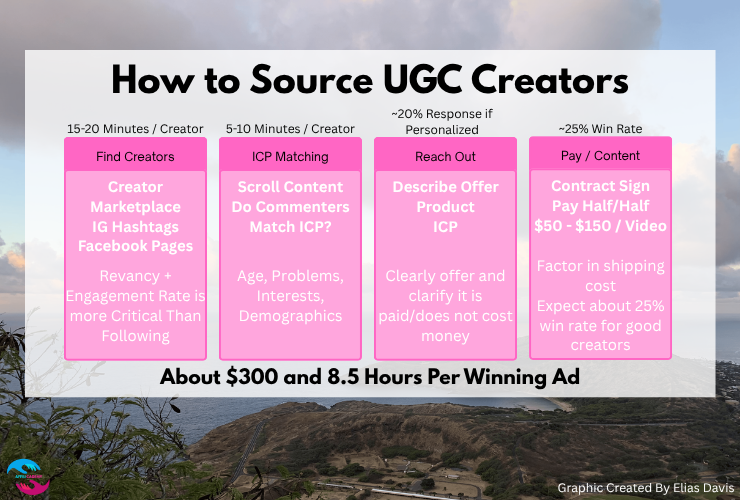
Go to TikTok Creator Marketplace or search relevant hashtags on Instagram
Find creators whose followers match your buyer profile
Send a direct message with a short brief — what the product is, who it's for, three talking points, and a call to action
Offer $50 to $150 per video, or free product plus a small fee for micro-creators under 50k followers
Brief ten creators at once. Two or three will deliver exactly what you need. Budget for the rest to miss.
The brands that struggle with UGC send one brief and wait. Message ten creators. Follow up. Iterate the brief if the first batch misses. Treat it like a paid traffic channel — constant input, constant testing.
What if UGC Creators are to Difficult to Source?
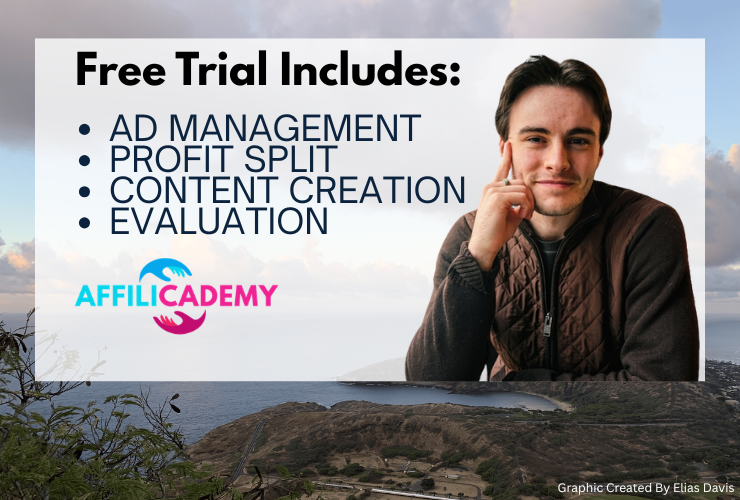
If you'd rather skip the sourcing entirely, Affilicademy runs a free trial where we build and manage your ads on a profit split. You pay nothing until the campaigns are working.
https://affilicademy.com/10freeugc
Keep Production Costs Low on Shopify-Specific Formats
A few formats that consistently perform well for ecommerce and cost almost nothing to produce:
Unboxing walkthroughs. Film the product coming out of your packaging. Show the inserts, the product itself, the details. Works especially well for brands with strong packaging or a premium physical product. Takes fifteen minutes to film.
Before and after. Show the problem, then show it solved. Works for skincare, supplements, home goods, fitness. Film both sides on a phone. No editing required beyond a cut.
Founder story. Talk directly to camera. Why you started the brand, who you made the product for, what problem you kept running into. Keep it personal, keep it short.
Customer reaction. Send product to ten customers. Ask them to film themselves opening it or using it for the first time. This costs you product and shipping. If your 3PL charges per outbound shipment, factor that into your cost per creative.
What Kills Cheap Ads
Unclear messaging. A low-production video where someone confidently describes a real problem and shows how it gets solved will outperform almost anything. A low-production video with no hook, no clear benefit, and no call to action will do nothing.
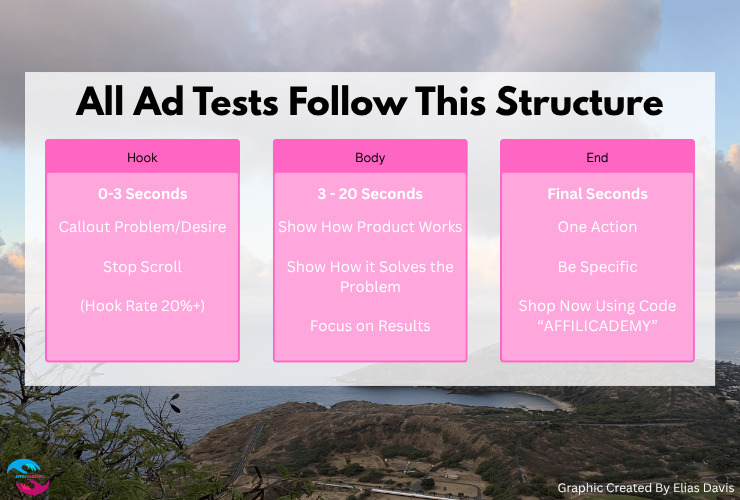
Spend the time on the first three seconds. What stops the scroll? A bold claim. A surprising visual. A question your buyer is already asking. That hook is worth more than anything else in the video.
A simple structure that works for every variation:
Hook — name the problem or desire directly
Bridge — show how the product gets them from where they are to where they want to be
CTA — tell them exactly what to do next (shop now, use code X, link in bio)
Every variation you produce is a different execution of that same structure.
The Math That Makes This Work
Here's how the numbers typically look for a Shopify brand running this approach:
20 UGC videos per month at $100 each = $2,000 in creative spend
3 to 5 of those videos will carry most of the performance
Cost per winning creative: $400 to $700
Compare that to a single agency production at $3,000 to $8,000 with 1-3 shots to work
Volume wins. Low production cost means losing creatives don't hurt, and winning creatives can scale immediately without waiting on a production cycle.
For brands on tighter margins — common in dropshipping or early-stage Shopify stores — produce the founder videos yourself. A phone, natural light, and a clear brief. The cost is your time.
FAQ
How do you make cheap ads that actually perform? Focus on message clarity. Film a video on your phone that names your customer's problem and shows how your product solves it. Add a strong hook in the first three seconds and a direct call to action at the end. Produce multiple variations and let Meta tell you which one works.
What is UGC and how do I get it cheaply? UGC is video or image content made by real people rather than a production team. Reach out directly to micro-creators (under 50k followers) on TikTok or Instagram with a clear brief. Expect to pay $50 to $150 per video. Brief ten creators at a time and treat any missed brief as a normal part of the process. Affilicademy offers a free trial where we handle sourcing and management on a profit split if you'd rather hand this off.
How many ad variations should I produce? One new creative per $5 of daily ad spend. At $100 a day, that's 20 new variations per month. This keeps frequency down and gives Meta's algorithm fresh material to test.
Why do cheap videos sometimes outperform expensive ads? Meta rewards content that earns engagement. Videos that look native to the platform generate stronger signals, which lowers your CPM in the auction and extends delivery. Polished production often signals "ad" immediately, which increases scroll-past rates before your message lands.
What should a cheap product ad say? Name your buyer's problem in the first three seconds. Show how your product solves it. Close with a clear next step. Every variation you film is a different way of delivering those three things.
Should I hire an agency for UGC or do it myself? Do it yourself if you have the time and want to keep margins tight. Hire an agency if the operational lift costs you more in time than the agency fee. Affilicademy's free trial removes the upfront fee entirely — we run the account on a profit split and only get paid when the campaigns perform.
Glossary
Ad Fatigue — Performance decline that happens when the same creative runs too long. Frequency climbs, CTR drops, CPA rises. Solved by rotating in new variations regularly.
Brief (Creative Brief) — A short document you give a creator that covers the product, the target buyer, the key talking points, and the call to action.
Call to Action (CTA) — The instruction at the end of the ad. "Shop now." "Use code X for 20% off." "Link in bio." Be specific.
Cost Per Acquisition (CPA) — Total ad spend divided by number of customers acquired. Your most important campaign metric.
Creative Variation — A distinct version of an ad with a different hook, setting, delivery, or format. Used to test what resonates with different segments.
Hook — The first one to three seconds of a video. The only job of the hook is to stop the scroll.
ICP (Ideal Customer Profile) — A specific description of your best buyer: their demographics, their problem, and what they want your product to do for them.
Micro-Creator — A creator with under 50,000 followers. Usually willing to produce content for $50 to $150 per video. Often higher engagement than larger accounts.
Profit Split — A payment model where your service provider takes a percentage of revenue generated instead of charging a flat fee upfront.
UGC (User-Generated Content) — Video or image content made by real people rather than production teams. Performs well in paid social because it reads as organic.
CPM (Cost Per Thousand Impressions) — What you pay per 1,000 ad views. Lower CPM means your creative is earning strong engagement signals in the auction.
3PL (Third-Party Logistics) — A fulfillment partner that stores your inventory and ships orders on your behalf. Relevant to creative budgeting when you're sending product to creators for UGC shoots.
AOV (Average Order Value) — The average amount a customer spends per order. Used to calculate your maximum allowable CPA.
Maximum Allowable CPA — AOV multiplied by your margin percentage. The most you can spend to acquire one customer and still break even. Your creative budget ceiling.