Grab Your Audience, Then Sell. This is How.
Hook vs. Hold: The Only Two Metrics That Matter for E-com Video in 2026
Paid ads and organic content are solving completely different problems. Conflating them is one of the most expensive mistakes I see Shopify operators make. The largest brands in the world can run organic content as ads, but if you want to see returns for a small business, you need to understand this:
Also, This Article Has a Video Version!
I filmed a video so that you can watch/listen to this video in the background, and still get all the great information. Here it is.
The Two Numbers That Tell You Everything
Two metrics determine whether a video ad is working: hook rate and hold rate.
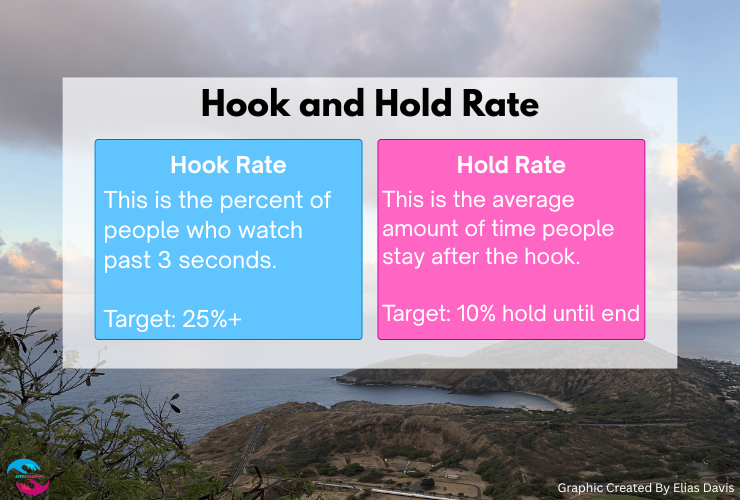
Hook rate is the percentage of people who watch past the first three seconds. Hold rate tells you how long people stay with the video after that. Both numbers feed directly into your CPA.
Low hook rate means you're bleeding impressions on people who scroll before the ad says anything. Low hold rate means you're paying for eyeballs that leave before the message lands. Meta reads both signals and uses them to decide how aggressively to distribute your ad and at what cost.
Most advertisers check CTR and ROAS and stop there. Those are lagging indicators. Hook rate and hold rate are the upstream variables that explain why your CTR looks the way it does. Fix performance by working backwards from these two numbers.
Hook Rate Is About Recognition
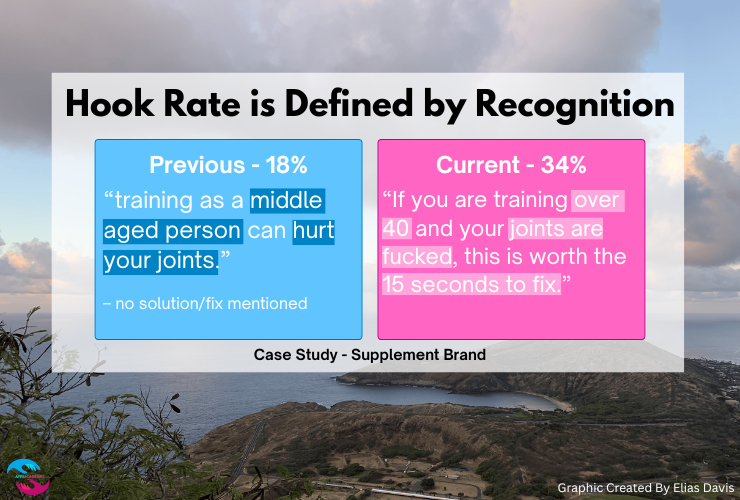
We were running ads for a supplement brand. The original video had good lighting, a clean script, solid pacing, and a hook that opened somewhere in the vicinity of "training as a middle-aged person can hurt your joints." Hook rate: 18%.
We reshot it on a phone. Same spokesperson, nearly identical offer. Changed one thing: the opening line became "If you are training over 40 and your joints are fucked, this is worth the 15 seconds to fix."
Hook rate went to 34% in the first week.
Production value actually went down. The offer didn't change. The product didn't change. What changed was that the second line reads like it was written for one specific person - and that person, when they hit it mid-scroll, recognized themselves immediately.
That's the job of a hook in paid media. Not to introduce your product. Not to be clever. To create a moment of recognition so precise that your ICP thinks that's me before they've consciously decided to keep watching.
Hold Rate Is an Engagement Problem
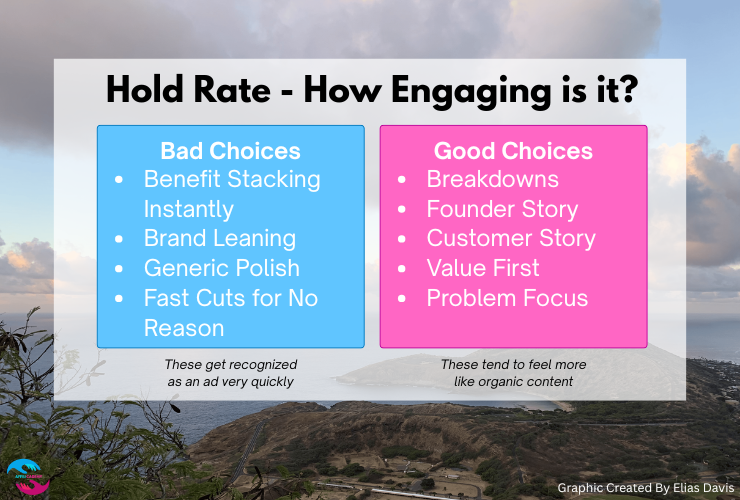
Once someone stops scrolling, your only job is to keep them watching. Hold rate is entirely an engagement problem.
The ads that hold attention longest deliver real value in a format that doesn't feel like an ad. A breakdown of why a specific ingredient works. A founder explaining a sourcing decision. A customer telling an unprompted story about the product. These work because they satisfy curiosity. The viewer is learning something, following a narrative, relating to a person. The ad earns its watch time.
What kills hold rate is the structure most polished ads follow: thirty seconds of benefit claims followed by a call to action. People know that structure. They've seen it thousands of times and check out the moment they recognize it. The creative that holds attention is the creative that doesn't feel like it's trying to hold attention.
Why This Matters More in 2026
CPMs on Meta have climbed. The platform is flooded with AI-generated content, technically competent, completely forgettable. Brands are producing acceptable ads at scale and getting mediocre results because acceptable is now the floor to see results.
In that environment, hook and hold are the mechanism of differentiation. The brands breaking out are the ones whose ads feel like something a real person made for a real audience.
When your hook rate is high and your hold rate is healthy, Meta reads that as proof your ad deserves cheaper distribution. More engagement, more completion signals, lower CPM, the whole campaign economics improve. Most operators miss this lever entirely. They try to fix CPA by adjusting bids, budgets, or offers while the actual problem is creative leaking at the top of the funnel before the message has a chance to do anything.
What to Do Differently
Pull your last five video ads and look at three-second view rate. Under 25% means your opening line isn't creating recognition fast enough. Rewrite it to speak directly to the person you're trying to reach. Name the specific problem in the first sentence.
Then look at average watch time relative to video length. People dropping off in the first third means the video is signaling "ad" too quickly. That usually means you're leading with brand presentation or benefit stacking before you've earned attention. Restructure so the valuable information comes first, before the viewer decides whether this is worth their time.
Your paid content should inform and engage before it sells. When your ICP watches something genuinely useful, the conversion follows at lower cost with better downstream metrics.
Claim the Meta Free Trial
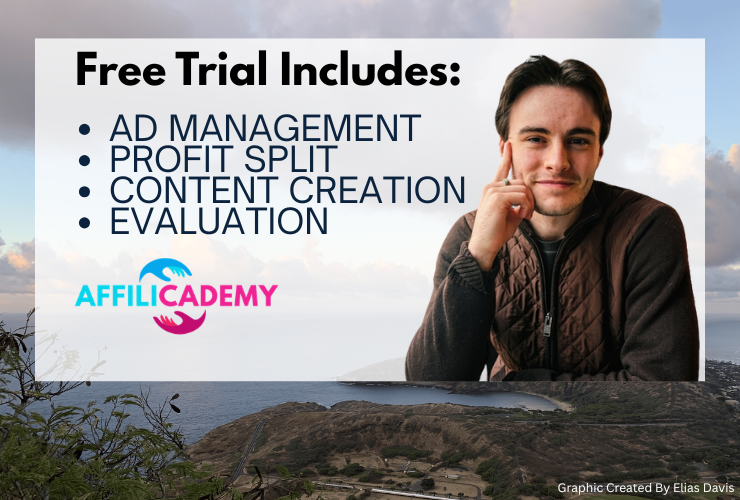
If you are tired of high costs, a free trial is probably just what you need. I will run all of your ads, and then, once you get great results, we switch to a performance basis. Split the sales. 0 cost up front.
Learn more here: https://affilicademy.com/10freeugc
Common Mistakes Worth Naming
The most common mistake is treating low hook rate as a production problem and spending more on creative. Most of the time it's a message-to-audience alignment problem. Use your ICP - which you can learn more about here
The second mistake is fixing the hook and leaving the hold alone. A strong open with a flat middle still loses people. Both metrics are solving different problems, recognition at the top, retention through the middle. Work on them separately.
FAQ
What is hook rate in Meta ads? Hook rate is the percentage of viewers who watch at least three seconds of your video after it appears in their feed. A low hook rate means the first few seconds aren't creating enough recognition for the person seeing the ad.
How do I write better hooks for paid ads? Open with a line that speaks directly to your ideal customer's specific situation. Name the problem they're already experiencing. The more precisely your hook identifies that person, the more likely they stop scrolling and keep watching.
How do I increase watch time on Meta ads? Lead with useful information before introducing your offer. A genuine story, a credible explanation, a specific breakdown of how something works — content that earns attention because the viewer is actually engaged with what's being said. Fast pacing and polished visuals don't hold people. Real value does.
What's the difference between hook rate and hold rate? Hook rate measures the percentage of people who watch past the first three seconds. Hold rate measures how long they keep watching after that. You need both. A high hook rate that drops immediately means your message isn't landing. Together they tell you exactly where in the video you're losing people.
Why do my video ads perform well in testing but fall apart at scale? At lower spend, Meta distributes to the warmest, most relevant segment of your audience — people who convert easily and produce strong engagement signals. As spend increases, distribution expands into colder audiences who need more persuasion. Marginal hook and hold rates get exposed at scale. Fix them before scaling, not after.
Does video length affect hook and hold rate? Length matters less than structure. A 60-second ad with a strong value structure can hold more of its audience than a 20-second ad that signals "commercial" in the first few frames. The question is whether the content earns the time it asks for. Rushing to the offer usually shortens effective watch time, not lengthens it.
Glossary
Average watch time — How long viewers watch a video ad on average before stopping. Used as a proxy for content quality and audience relevance in paid social.
CPA (cost per acquisition) — Total ad spend divided by total conversions. Hook rate and hold rate directly influence CPA by affecting how cheaply Meta distributes your ad.
CPM (cost per thousand impressions) — What you pay per 1,000 ad views. Strong hook and hold rates lower your CPM by sending positive engagement signals in Meta's auction.
Hold rate — The percentage of a video's total duration that viewers watch on average. Measures how effectively your content retains attention after the hook.
Hook rate — The percentage of viewers who watch at least three seconds of your video. Reflects how well the opening moment creates recognition for the intended audience.
ICP (ideal customer profile) — A specific description of the person most likely to buy your product. Effective hooks are written for the ICP, not a general audience.
Three-second view rate — Meta's reported metric for the percentage of people who watched at least three seconds of a video. Functionally the same as hook rate for most analysis.
Watch time — Total or average duration of video views. Meta uses it as a quality signal that influences delivery cost. Consistent watch time tells the algorithm your content earns and holds attention.