How to Drive Consistent Results from Meta Ads
How to Build a Predictable Customer Acquisition System Using Meta Ads
Predictable acquisition comes from the ability to consistent create new ads that do well. You create new ads that do well, by understanding levels of awareness and ICP. This article will explain both of these steps, as well as some examples, and how to put them together.
if you prefer video, you are in luck!
My Experience with Meta Ads
When running ads for a dropshipping store in 2024, I was struggling to drive consistent results. The store was selling a tool to help quit vaping, and it was $29.99, plus a weekly subscription with a set of fidget toys to get your mind off vaping.

The problem was, I had a LTGP (Lifetime Gross Profit) of around $55. My cost for the initial order was $12.50, plus ads. I made up the rest with about 12% margins on fidget toys. The issue was ad spend. Sometimes, it would cost upwards of $75 to acquire a customer, which meant I was losing money.
The first major fix was creating better ads. Instead of showing people "smoking" the tool instead of a vape, which correlated the products and often got my ads removed, I swapped them to problem ads. "Are you struggling with x?" "Have you been trying to y?"
These worked so much better. I got a much lower CPA, which meant I was profitable. I couldn't grow the business though.
This is where step 2 came in - consistency. Instead of randomly testing a few ads a month, I tested 10 new ads a week, with a specific ICP and problem statement. Embarrassed about people seeing you vape? Check. Cost of vapes to high? Check. Parents disappointed? Check.
By consistently testing new ads I created a system where I knew why ads worked, and was able to increase budget consistently without dealing with ad fatigue.
What’s Actually Happening
when you look at CPA, ROAS, and daily fluctuations, and try to optimize from there, you are using indicators that take days or weeks to adjust. That approach will always feel unstable.
If your system relies on a small number of ads working at any given time, volatility is inevitable. So, to prevent this, you want to consistently test new creatives.
The Real Lever: ICP + Awareness
The two inputs that matter most are your ideal customer profile and their level of awareness.
Your ICP is primarily a method to articulate what the viewer is dealing with. In my vaping example, the difference between “people who vape” and “people embarrassed to vape in public” is everything. One is broad, the other is specific and emotionally targetable.

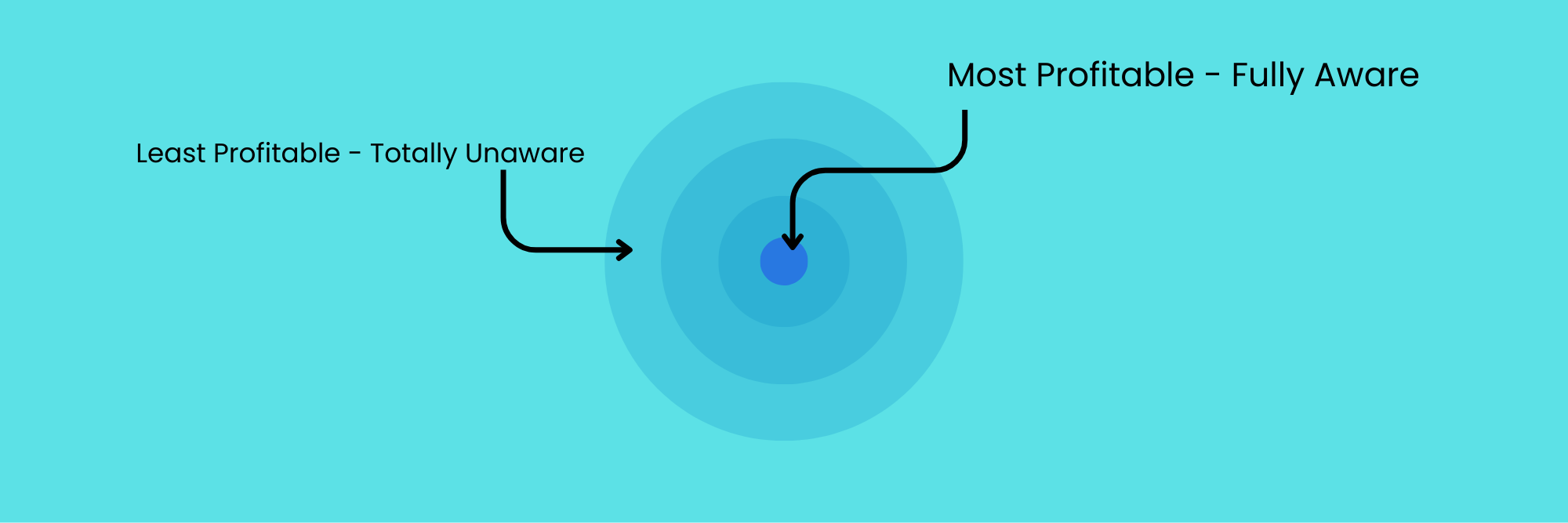
Awareness determines how you communicate that problem. Someone unaware need an explanation of symptoms, not a product offer. Someone problem-aware needs a solution. Someone solution-aware needs a reason to choose you. If you ignore this, your ads will only work on a narrow segment of your audience, which limits both performance and scale.
Why This Increases Hit Rate
Using these methods your average ad will improve, but it also lets you test your messaging over many different ads, and consistently improve over time by targeting stronger and stronger ad messages.
Instead of launching five completely different ideas, you might launch ten ads around the same ICP problem, each framed for a different awareness level or angle. One highlights social embarrassment, another focuses on long-term health cost, another frames the habit as a loss of control.
Practical Application
This is the step by step process I use when creating Meta ads.
Start by writing out 5–10 specific ICP problems. These should feel real and situational. If your customer reads it and immediately thinks “that’s me,” you’re on the right track.
Then map each problem across awareness levels. Take one problem and write three versions of it. Specifically, start with the symptom. For example with vaping, it could be not having enough money each month. Then, people who know it is due to vaping, write it as the idea that they could actually quit, and it is easier than they thought. Finally, the reason why that product is the best for their problem. This alone gives you a structured pipeline for creative testing.
From there, build volume. This is where most people fall short. Testing 10 ads a week forces iteration. It forces you to learn what messaging works and what doesn’t. Over time, patterns emerge, and your ability to predict outcomes improves. Commit to a minimum monthly testing volume. Be ok with not getting it right the first time. Keep trying.
Layer in basic acquisition math to guide decisions. You don’t need complexity here. If your target CPA is $40 and your ads are coming in at $60, either your message isn’t resonating or your targeting is too broad. Use metrics like CTR and conversion rate to diagnose where the breakdown is happening.
Note from the author: CTR being good but a bad conversion rate is a disconnect from why your ad is relevant to the product, or a pricing issue usually. This is a very common issue, and it usually means you need a better funnel.
Retargeting should extend this system. If someone engages with a problem-aware ad but doesn’t convert, show them a solution-aware ad next. This is how you make retargeting on Meta ads feel intentional instead of repetitive.
Strategic Takeaway
If you want a predictable customer acquisition system using Meta ads, stop focusing on finding the perfect ad. Focus on building a system that produces good ads consistently. When you understand your ICP, align messaging with awareness levels, and commit to high-volume testing, performance improves.
If you want me to implement this, for free, for your brand, fill out the form below.
https://affilicademy.com/10freeugc

FAQ
How do I build a predictable customer acquisition system using Meta ads?
You build predictability by controlling your inputs, specifically how consistently you create new ads that align with your ICP and awareness levels. When you can reliably produce ads that resonate, performance stabilizes over time.
What is acquisition math and how does it help?
Acquisition math helps you understand how metrics like CTR and conversion rate impact your CPA. It gives you a baseline for what “working” actually means in your campaigns. This allows you to make better decisions when testing and scaling ads.
How do I scale ads predictably?
Scaling comes from increasing budget on ads that consistently hit your targets while continuously introducing new creatives. As long as new winners are entering your system, you can scale without relying on a single ad. This reduces performance volatility significantly.
How do I make better ads on Meta?
Better ads come from specificity and structure. When you clearly define your ICP and tailor messaging to different awareness levels, your ads become more relevant. This increases engagement and improves overall performance.
How do I retarget customers on Meta ads effectively?
Effective retargeting moves users further along the awareness spectrum. Instead of repeating the same message, you introduce new angles that address objections or present your solution more directly. This increases conversion rates and improves efficiency.
Glossary
Acquisition Math
Acquisition math is the process of analyzing funnel metrics to understand how traffic converts into customers and whether campaigns are profitable.
Ad Fatigue
Ad fatigue occurs when a creative loses effectiveness due to repeated exposure to the same audience, resulting in declining performance.
Click-Through Rate (CTR)
CTR is the percentage of users who click on an ad after seeing it, indicating how compelling the creative is.
Conversion Rate
Conversion rate measures the percentage of users who complete a desired action after clicking an ad.
Cost Per Acquisition (CPA)
CPA is the average cost required to acquire one customer through advertising.
Creative Throughput
Creative throughput refers to the consistent production and testing of new ad creatives within a campaign.
Dropshipping
Dropshipping is a fulfillment model where products are sold without holding inventory, with orders shipped directly from suppliers to customers.
Funnel
A funnel represents the stages a user goes through from initial awareness to final conversion.
Hit Rate
Hit rate is the percentage of ads that meet or exceed predefined performance benchmarks.
Ideal Customer Profile (ICP) - full article
An ICP is a detailed description of the target customer based on their specific problems, behaviors, and motivations.
Level of Awareness - full article
Level of awareness refers to how aware a potential customer is of their problem and available solutions.
Lifetime Gross Profit (LTGP)
LTGP is the total gross profit expected from a customer over their entire lifecycle, including initial purchases and recurring revenue.
Margin
Margin is the percentage of revenue that remains after accounting for costs, indicating profitability.
Message-Market Fit
Message-market fit is the alignment between your messaging and the specific problems and desires of your target audience.
Problem-Aware - full article
Problem-aware describes an audience that recognizes they have an issue but has not yet committed to a solution.
Retargeting - full article
Retargeting is the process of showing ads to users who have previously interacted with your brand to increase the likelihood of conversion.
Scaling
Scaling is the process of increasing ad spend while maintaining or improving efficiency metrics.
Solution-Aware - full article
Solution-aware describes an audience that is actively considering different ways to solve their problem.
Unaware Audience - full article
An unaware audience does not yet recognize they have a problem or need a solution, requiring attention-grabbing messaging.