
Why Your Meta Ads ROAS Dropped April 2026
Why Your Meta Ads ROAS Dropped April 2026
When I Googled "Why did my ads suddenly drop in ROAS" I saw a few blogs, a few reddit posts, and the most common answer was "Meta broke."
This is not a helpful answer. Not only does it lead you to the conclusion there is nothing you can do, but it also makes you feel like everyone is experiencing this.
We aren't. This is why your Meta ads failed, and how to fix it.
This Article Has a Video Version!
I filmed this to make sure those who prefer to watch instead of read could still have a great experience with this article.
The Two Biggest Things That Kill ROAS
The first one catches almost everyone off guard: you raised your budget.
I did this on a campaign last year, a clean performer, steady CPA, everything making sense. I bumped the daily spend by about 40%, and within a week the ROAS had slid noticeably. I hadn't changed the creative. The offer was identical. But what I'd actually done was ask Meta's algorithm to reach a much wider slice of my audience, and that wider slice had weaker purchase intent.
The algorithm finds your most likely buyers first. That's the whole design. When you push more budget through, it needs more impressions to fill, so it expands outward into colder, less-qualified segments. The ad is the same, but it is only able to convert product aware audiences for example. This means when people do not know about your product, they don't convert.
Note: this is the most obvious when you run offers and discounts, and they can't scale budget over a few hundred dollars a day. The audience just isn't ready for that yet.
The second culprit is frequency, and it's more subtle. If you've been running the same creative for three or four weeks and your frequency is climbing past three, the same people are seeing the same ad on repeat. When engagement drops, as a result of people already having seen your ads, Meta interprets that as a quality signal and starts throttling the delivery toward worse placements and worse audiences. Your CPM goes up, your clicks go down, and your ROAS follows.
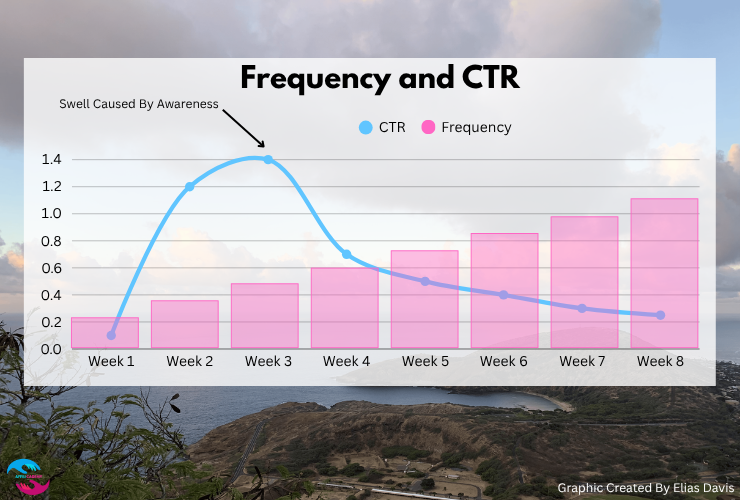
Note: this one is very easy to prevent. All you have to do is weekly test new creatives and turn off older ones, and this will never come up.
What ROAS Actually Measures (and What It Doesn't)
ROAS is a simple metric: purchase value divided by ad spend. If you spend $1,000 and generate $4,000 in sales, your ROAS is 4. It tells you how much revenue you're getting back per dollar spent, which is useful as a quick read on campaign health.
CPA is a different number entirely. That's your cost per purchase, what you actually paid to acquire one customer. A campaign can have a strong ROAS and a terrible CPA if the order value is high but the customer acquisition cost is burning through margin.
That is why a lot of experienced operators have moved toward LTGP to CAC as the more honest metric. LTGP - lifetime gross profit - measures what a customer is actually worth to the business over time, not just on the first transaction. When you compare that against your customer acquisition cost, you're looking at real profitability, not just top-line revenue.
That context changes how you read a ROAS number entirely. A 2x ROAS on a high-margin product with strong retention might be excellent. A 5x ROAS on a low-margin product with no repeat purchases might be burning cash.
How CTR and Conversion Rate Actually Move ROAS
Here's a mechanism that's worth understanding clearly. Your CPM - what Meta charges you per thousand impressions - is largely fixed by the auction. You don't control it directly. What you do control is what happens after the impression: whether people click, and whether they convert once they do.
A higher CTR means more clicks from the same number of impressions. Since your impression cost stays roughly constant, you're getting more traffic for the same spend. A higher conversion rate means more of that traffic turns into buyers. Both of these improve your ROAS without requiring any change to your budget or targeting.
That is why creative quality and landing page performance matter so much in a maturing campaign - when CPM is competitive and you can't compress it further, the only lever is click-through and conversion efficiency.
What to Do Right Now
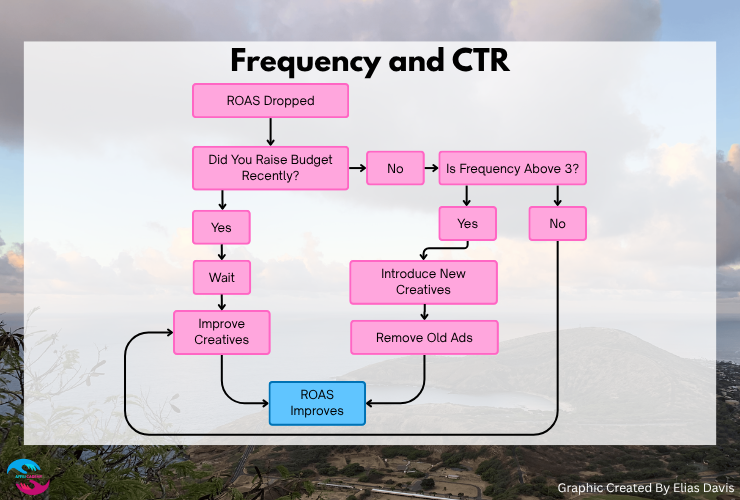
If your ROAS dropped after a budget increase, don't immediately pull the campaign. Hold the budget steady for a few days and watch whether performance stabilizes as the algorithm recalibrates.
If it doesn't stabilize within five to seven days, the real issue may be that your messaging isn't built for colder audiences. The creative that converts someone who already knows your product won't land the same way with someone who's never heard of you.
If your frequency is above three and you haven't added new creative in the past two weeks, that's where to start. A rough guideline I've found useful: one new creative for every five dollars of daily ad spend. At $100 a day, you're rotating in around 20 new variations a month. That keeps the algorithm fed and frequency from stacking up on any single ad.
Don't Forget The Free Trial of Meta Ads
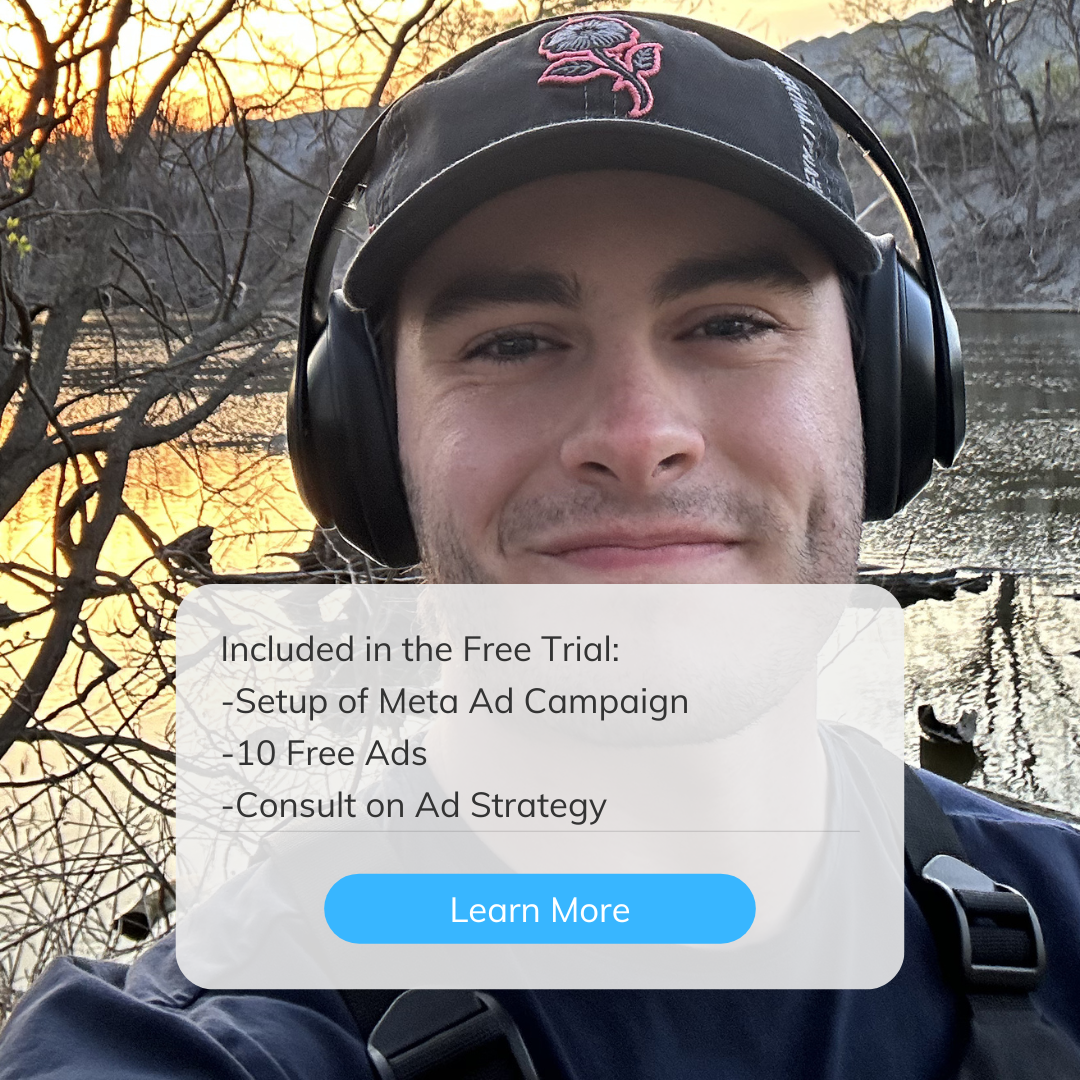
If you are tired of high costs, a free trial is probably just what you need. I will run all of your ads, and then, once you get great results, we switch to a performance basis. Split the sales. 0 cost up front.
Learn more here:https://affilicademy.com/10freeugc
Frequently Asked Questions
Why did my Meta ads ROAS drop randomly in April 2026? If your account is out of the learning phase and nothing obvious changed, the two most common causes are a recent budget increase and rising ad frequency. A budget increase pushes the algorithm to reach colder, lower-intent audiences, which converts at a lower rate. Frequency above three on a single creative typically signals ad fatigue, which drives down engagement and degrades delivery quality over time.
How do you calculate ROAS on Meta ads? ROAS is calculated by dividing total purchase value by total ad spend over the same period. If your ads generated $5,000 in revenue and you spent $1,000, your ROAS is 5. It reflects how much revenue came back per dollar of advertising, though it doesn't account for margins or long-term customer value.
Is Meta ads CPA the same as ROAS? They're related but measure different things. CPA — cost per acquisition — tells you what you paid to generate one purchase. ROAS tells you how much revenue you received per dollar spent. A campaign can have a high ROAS and a high CPA simultaneously if average order value is elevated. Both metrics are useful, but they answer different questions.
Is LTGP to CAC better than ROAS for evaluating Meta ads? For most businesses, yes. ROAS measures gross revenue return, which doesn't account for product margins, overhead, or whether a customer comes back. LTGP to CAC compares the total lifetime gross profit of a customer against what you paid to acquire them, which is a much clearer picture of actual profitability. It's particularly important for businesses with repeat purchase potential or subscription components.
How do CTR and conversion rate impact ROAS? Both metrics improve ROAS by generating more revenue from the same impression spend. Since CPM — the cost of reaching your audience — is set by the auction, improving CTR means more clicks per dollar of traffic, and improving conversion rate means more purchases per click. Neither requires a budget change, which makes creative quality and landing page performance two of the most leveraged variables in any campaign.
Why does increasing my Meta ads budget lower ROAS? Meta's algorithm prioritizes delivery to your highest-intent audience segments first. When you increase the budget, it needs more impressions to fulfill, so it expands into broader and colder segments where purchase probability is lower. The result is more reach at a lower conversion rate, which compresses ROAS. The solution isn't to revert the budget — it's to introduce creative designed to convert colder, less product-aware audiences.
Glossary
CAC (Customer Acquisition Cost): The total advertising spend required to generate a single new customer, calculated by dividing total ad spend by the number of customers acquired in a given period. Full article
Conversion Rate: The percentage of users who complete a desired action — such as a purchase — after clicking on an ad, reflecting landing page effectiveness and offer alignment. Full article
CPA (Cost Per Acquisition): The cost required to generate one conversion event, calculated by dividing total ad spend by the number of conversions. Related to but distinct from ROAS. Full article
CPM (Cost Per Thousand Impressions): The price paid for one thousand ad impressions, determined by auction dynamics, audience competition, and engagement signals. CPM is largely outside the advertiser's direct control. Full article
CTR (Click-Through Rate): The percentage of people who click on an ad after seeing it, used as an indicator of creative relevance and audience resonance. Full article
Frequency: The average number of times a unique user has seen a specific ad within a given time window. High frequency — typically above three — is associated with ad fatigue and declining engagement. Full article
Learning Phase: The initial period after a campaign is launched during which Meta's algorithm gathers conversion data to optimize future delivery. Campaigns typically need a set number of conversion events to exit this phase and stabilize. Full article
LTGP (Lifetime Gross Profit): The total profit a customer generates over their entire relationship with a business, calculated after subtracting cost of goods sold. Used in LTGP to CAC analysis to measure true profitability. Full article
LTGP to CAC Ratio: A profitability metric comparing lifetime gross profit per customer to the cost of acquiring that customer. A more complete measure of marketing efficiency than ROAS alone. Full article
ROAS (Return on Ad Spend): A performance metric calculated by dividing revenue generated from ads by the total amount spent. Expressed as a multiple, such as 3x or 4x, indicating dollars returned per dollar spent. Full article