The 4 Most Important Meta Ads Mistakes You Are Making
The Most Common Mistakes in Paid Social Media Campaigns (And Why They Keep Happening)
Most people running paid social media campaigns think they have a targeting problem. They don't. They have a thinking-before-spending problem, and it shows up in the same four places, almost every time. Lets fix it.
This Article Has a Video Version!
I filmed this on my YouTube channel, for those that prefer to watch instead of read.
The Page No One Tested
I was three weeks into running a campaign for a client last year when we finally pulled the landing page data. The click-through rate was solid, the creative was doing its job. But conversions were barely registering, maybe 0.5 percent on a page that needed to be closer to 1.2-1.3 to make the economics work. The ad wasn't the problem. The page had never been tested with real traffic before we sent paid visitors to it. We'd been spending confidently into a broken funnel.
This is one of the most common mistakes in paid social media campaigns, and it's the one nobody talks about because it's embarrassing. People will spend real money driving traffic to a page that hasn't seen a single organic visitor, hasn't had a heat map run on it, hasn't been read out loud by someone who isn't the person who wrote it. Then the conversion rate tanks and they blame Meta's targeting. The ad was never the problem. The landing page was the problem, and the landing page could have been identified as a problem before the first dollar was spent.
Note: you can tell if the landing page or ad is the primary problem by looking at the CTR on the ad vs the conversion rate on page. If you CTR is good, the ad is fine. If the conversion rate is bad on landing, check in this order: Page is working, value is clear, photos are good, pricing makes sense. Usually one of those will cover the issue.
Before you launch any paid campaign, the page needs to work first. Run some organic traffic to it. Ask someone outside your business to try to convert. Time how long it takes them to understand what you're selling. If they hesitate, the paid traffic will hesitate too, except you'll be paying for every hesitation.
Friends do work for this, but they will be nicer. If you ask strangers or colleagues, they tend to be more accurate. My favorite way is to offer a 100% off coupon with free shipping, and say that you need to know how good your site is. You can get strangers to see how fast they complete checkout, and you know if the site is good. Costs around $20 for most products.
Running a Campaign Without Knowing Your Number
The second mistake is subtler, and honestly more common among people who've been doing this for a while. They'll set a budget, launch the campaign, and watch the dashboard, but they have no idea what their cost per acquisition actually needs to be for the business to not lose money.
This is just gambling with much more boring steps.
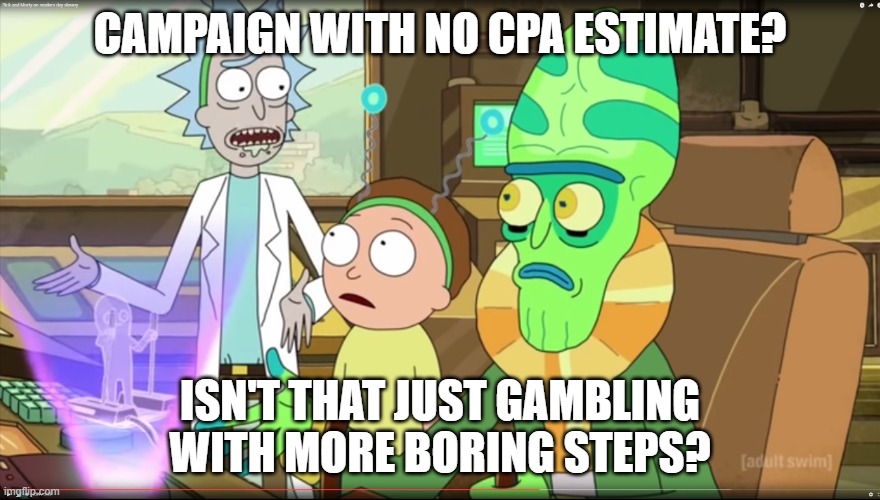
Before you run a single test, you need to work backward from your margin. If your product makes $80 in gross profit per sale, and you're paying $95 to acquire each customer, you are accelerating toward a loss.
The biggest mistake meta ads beginners make is launching without this number defined. Set your ceiling first. Then build the campaign to hit under it. This is improved by fixing the next mistakes.
Defining Who the Ad Is Actually For
Here's where most campaigns get vague in a way that costs real money. The targeting on Meta has become significantly broader over time, the algorithm makes its own decisions about who sees your ad, and in many cases, broad targeting outperforms manual audience construction. But this doesn't mean you get to skip building a clear Ideal Customer Profile.
Your ICP is the lens through which you write the ad.
If you don't know whether you're talking to a 34-year-old female entrepreneur who's already tried two other solutions and is skeptical, or a 22-year-old guy who just discovered the problem exists, you will write ad copy that speaks to no one in particular.

Note: the easiest way to know if you are doing this is if you are talking about the product more than the problem it solves. If you don't know the specific problem, you have nothing else to talk about than the product.
The creative strategy for meta ads changes completely based on where your customer is in their awareness journey. A person who knows they have a problem and is evaluating options needs different messaging than someone who doesn't know the problem exists yet. Most campaigns fail to make this distinction, and the result is creative that gets scrolled past by everyone because it resonates deeply with no one.
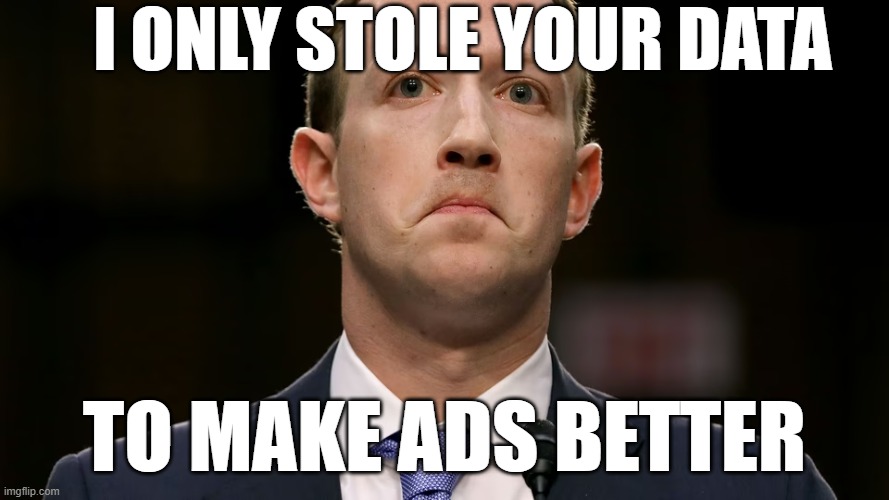
Write the ad for one specific person. Let Meta figure out who else looks like them. (That's why they steal so much data! haha)
Killing the Campaign Before It Has Data
This is probably the most expensive mistake in the list, and it's the one I see most frequently from people who are technically competent in every other area. They'll launch a campaign, check it at day three, see a CPA they don't like, and kill it. Then they start over, watch the same thing happen, and conclude that paid social doesn't work for their offer.
Meta's delivery system, the Andromeda algorithm, still needs time and conversion data to calibrate even though it is faster than it used to be. In the early days of a campaign, it's sampling broadly, testing which users respond, and adjusting delivery accordingly.
The CPA you see in day two is not the CPA you'll see in day fourteen, assuming the creative and offer are fundamentally sound. Pulling campaigns before they have statistically meaningful data is like reading a book's first sentence and deciding you know the ending. Give it a week.
Note: you can make this much faster by having clear headlines, creatives, and a good offer that speaks to a solid ICP, which is why I wrote that before this. I usually only need about 48-72 hours to know if a creative is good by being clear with messaging.
Why These Mistakes Keep Happening
None of these are obscure. They're not advanced traps that even experienced advertisers fall into. They happen because paid social feels fast, and people treat it accordingly. They launch before they're ready, they measure before there's anything to measure, and they define success in terms of comfort rather than math.
The operators who get consistent results from Meta ads are not necessarily more creative or more technically sophisticated than everyone else. They're just more deliberate. They know their numbers before they spend. They test the page before they pay for traffic. They write creative with a specific human in mind. And they give the algorithm enough room to do its job before they interfere.
Most people are not doing these four things consistently. That's actually good news, because it means the baseline for paid social campaigns isn't as high as it feels. You don't have to be exceptional. You just have to be systematic.
The Best New for Small Business Owners
If you are tired of high costs, a free trial is probably just what you need. I will run all of your ads, and then, once you get great results, we switch to a performance basis. Split the sales. 0 cost up front.
Learn more here:https://affilicademy.com/10freeugc
FAQ
What is the biggest mistake people make with Meta ads? The most consistently damaging mistake is launching a campaign before the landing page has been validated with real traffic. Advertisers focus heavily on creative and targeting while overlooking the fact that a poorly converting landing page will neutralize even the best ad. Testing the page first — through organic traffic, user testing, or both — is the step most people skip because it's unglamorous, but it's often the highest-leverage fix available.
Is Meta ad targeting actually good? Meta's targeting has evolved significantly. The algorithm now builds its own audience models based on pixel data, creative signals, and conversion history, which means broad targeting — with no manual audience restrictions — often outperforms interest-based segmentation. However, the quality of that targeting depends heavily on the creative and landing page you're giving it to work with. The algorithm optimizes toward conversions; if your page doesn't convert, it has nothing to optimize against.
How many creatives should you run on Meta ads? A useful baseline is roughly one new creative variation for every $5 in daily ad spend, introduced consistently over time. Running too few creatives leads to ad fatigue — the same users see the same ad repeatedly, engagement drops, CPMs rise, and the algorithm reduces delivery. Keeping fresh creative in rotation gives the algorithm more signals to work with and keeps frequency at a manageable level across your audience.
How many tests should you run on Meta ads before making decisions? Most campaigns need at least 50 conversion events and 7 to 14 days of run time before the data is reliable enough to inform structural decisions. Testing too early — and especially pausing campaigns in the first few days — interrupts the learning phase and resets the optimization process. The more meaningful question is whether you have enough data to be confident in the pattern you're seeing, not whether enough time has passed.
What does a creative strategy for Meta ads actually look like? Effective creative strategy starts with a clearly defined ICP — a specific person with specific motivations and a specific awareness level. From there, it maps different ad formats and messaging angles to different stages of that person's decision process. Someone who has never heard of your product needs a different ad than someone who's already compared you to competitors. A strong creative strategy produces multiple variations across these awareness levels and rotates them systematically rather than running one ad until it dies.
Why does my CPA spike when I increase my Meta budget? Budget increases force the algorithm to expand delivery volume. To fill more impressions, it moves into colder, lower-intent audience segments — people earlier in their decision process who are less likely to convert on the same creative that worked for a warmer audience. The CPA rises because the audience quality changes, not because the ad stopped working. Scaling effectively usually requires introducing creative designed for colder audiences alongside the budget increase, rather than simply pushing more spend into the existing setup.
Glossary
Ad Fatigue - full article
Ad fatigue occurs when an audience has seen the same creative repeatedly, leading to declining CTR and rising costs.
Algorithmic Optimization
The process by which Meta's delivery system learns from campaign data to show ads to users who are more likely to complete the desired action, such as a purchase or lead submission.
Broad Targeting - full article
An advertising configuration in which no manual audience filters — such as interests, demographics, or behaviors — are applied, allowing the algorithm to determine delivery based on its own user modeling.
CAC (Customer Acquisition Cost) - full article
CAC is the total cost required to acquire a new customer through advertising and marketing efforts.
Click-Through Rate (CTR) - full article
Click-through rate is the percentage of users who click on an ad after seeing it, indicating how compelling and relevant the ad is.
Conversion Rate - full article
Conversion rate is the percentage of users who take a desired action after clicking an ad, such as making a purchase.
Cost Per Acquisition (CPA) - full article
Cost per acquisition is the total cost required to generate a customer or conversion, combining traffic costs and conversion performance.
Cost Per Click (CPC) - full article
Cost per click is the average amount paid for each click, primarily influenced by CTR and CPM within the ad auction.
Cost Per Thousand Impressions (CPM) - full article
CPM is the cost to deliver 1,000 impressions, affected by competition, audience targeting, and engagement signals.
ICP- full article
Ideal Customer Profile, or the one person who your ads target specifically. This should be the perfect buyer for your product.
Learning Phase
The initial period of a Meta campaign during which the algorithm gathers data on user responses to optimize future delivery. Campaigns typically require a defined number of conversion events to exit this phase.
LTV (Lifetime Value)
LTV refers to the total revenue a customer generates over the duration of their relationship with a business.
LTV:CAC Ratio
This ratio compares customer value to acquisition cost and is used to determine whether marketing efforts are profitable.
LTGP (Lifetime Gross Profit)
LTGP measures the total profit generated by a customer after accounting for cost of goods sold over their lifetime.
Meta Ads - full article
Meta ads are paid advertisements run across platforms owned by Meta, including Facebook and Instagram.
Pixel Data
Behavioral data collected by Meta's tracking pixel installed on an advertiser's website, used by the algorithm to understand which types of users are most likely to convert.
ROAS (Return on Ad Spend) - full article
A performance metric calculated by dividing revenue generated from advertising by the total amount spent on those ads.