Succeeding at Meta Ads Requires an Understanding of This
Debugging the Andromeda Algorithm: Why Your Winning Ads Suddenly Die
Your Ad Didn't Get Worse. Your Audience Did.
Most people, when their best ad dies, assume the creative stopped working. They pull it, start over, test something new, and wonder why the next version never quite hits the same way. I did this for months before I understood what was actually happening. The ad was fine. The problem was that Meta had already shown it to every person it was going to convert, and now it was reaching the next group, who need much better reasoning to purchase.
There is a Video Version of This Available!
This has the same content as this article, in a video format.
That's the Andromeda algorithm in one sentence. It finds your best customers first, burns through them, and then hands you a bill for showing your ad to everyone else.
If you use it wrong.
What Andromeda Actually Does
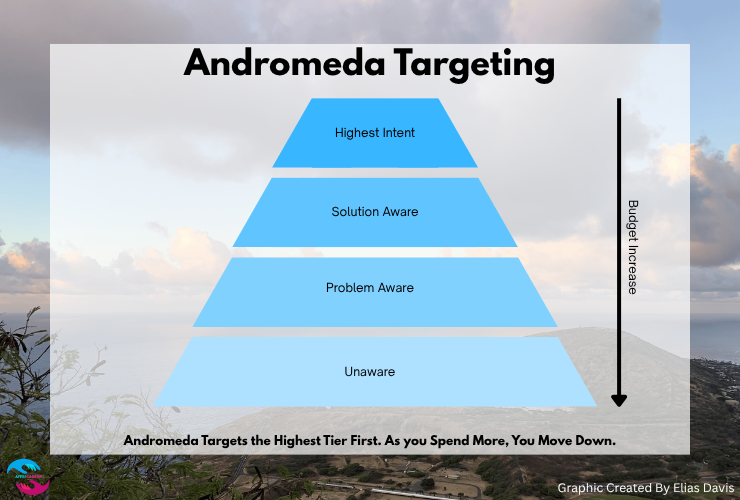
Meta's Andromeda algorithm is the delivery system underneath every ad you run. When you launch a campaign, it makes predictions on who your most profitable audience will be. Based on your creative, your landing page, your offer, and your historical data, it builds a probability map of who is most likely to convert. Then it starts with the highest-probability buyers.
This is great news at first. Your early results look clean. Your CPA is low, your ROAS is strong, and the numbers make sense. You feel like you've cracked something. Then you scale, or you let the campaign run long enough, and the performance fails to drive the same results over time.
What changed is the audience. Andromeda spent your best leads early and is now working through lower-probability segments.
Understanding this one mechanism changes how you read every result you've ever had.
Why Scaling Breaks Campaigns
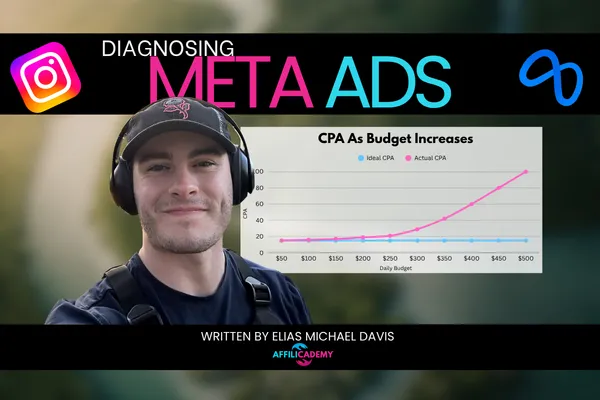
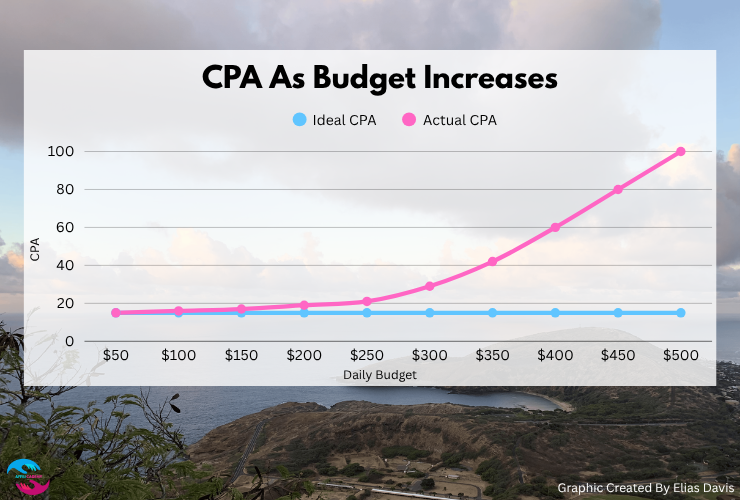
I ran into this clearly when I tried pushing a campaign from around $150 a day to $600. The first week looked good, volume went up, leads came in. By week two, CPA had nearly doubled. I kept the creative the same, the offer hadn't changed, and I couldn't find an obvious reason for the shift. I pulled the campaign down and rebuilt it from scratch, which was the wrong move.
What was actually happening is straightforward once you know it. At $150 a day, Andromeda was pulling from a contained pool — the most interested, most qualified segment of the audience. When I pushed to $600, it needed to fill four times the impression volume. To do that, it expanded outward. It reached colder audiences, people with weaker intent, people earlier in their decision process. Naturally, those people converted at a lower rate. I had asked it to reach people it wasn't built to reach, without updating the messaging to meet them where they were.
Frequency Is the Other Killer
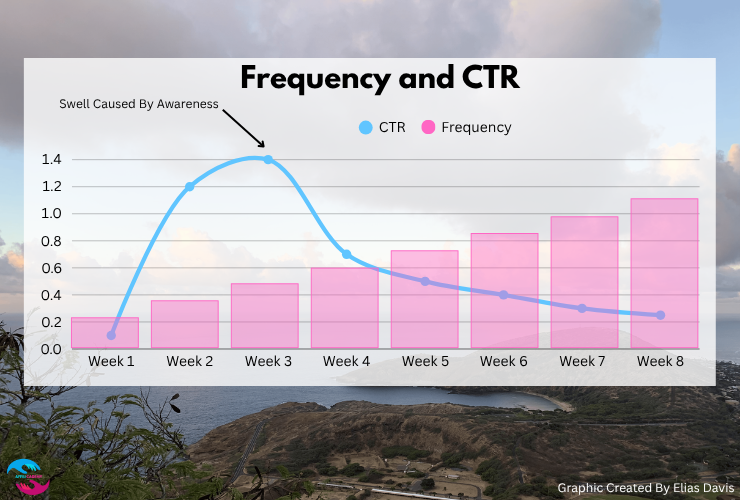
If you've been running the same set of ads for a long time without introducing new creative, your frequency climbs. The same people are seeing the same ad over and over. At low frequency, this is fine, repetition builds familiarity. This is shown with the visual below, the swell being increases familiarity. At high frequency, it builds annoyance.
Engagement drops. CPMs rise. Meta interprets the declining engagement as a signal that your ad is poor quality and begins throttling delivery.
I've seen advertisers blame the platform for this when the real problem is that they haven't added a new creative in six weeks. Andromeda can only work with what you give it. If you give it one ad and run it until people are sick of it, the results will reflect that.
Meta Ads Are Expensive and Crowded.
I hear the same complaint constantly right now: Meta ads don't work anymore. What's actually true is that Meta ads work the same way they always have, but the bar to compete has risen.
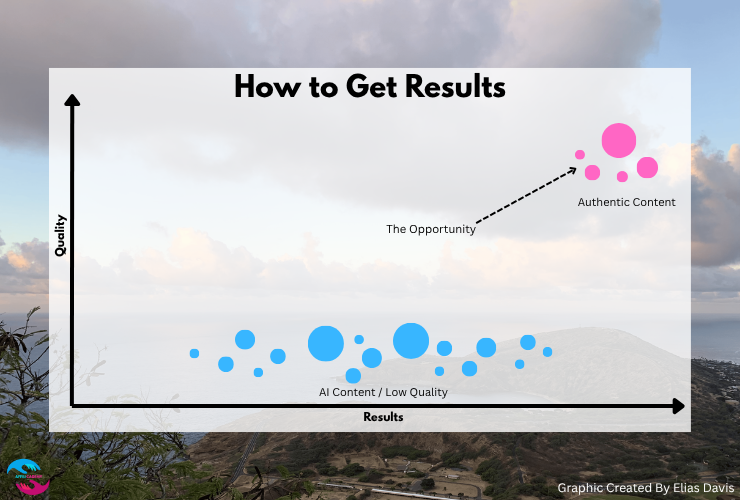
CPMs are higher. Auctions are more competitive. And AI-generated content has flooded the platform with ads that all look roughly the same, polished, generic, and easy to ignore.
That last part is the one worth sitting with. AI tools have made it possible for anyone to produce ad content without any real knowledge of how advertising works. The result is a massive increase in average ad volume with no corresponding increase in average ad quality. Most of it is forgettable. That's actually useful information for anyone willing to do the opposite.
The research is consistent on this: somewhere between 70 and 80 percent of people actively dislike advertising. They skip it, block it, or scroll past it without registering it. The ads that work are the ones that don't feel like ads.
Organic-looking content, real people, real environments, perform better than polished production because it doesn't trigger the automatic skip response.
If everyone else is racing toward AI-generated polish, the differentiator is authenticity. The gap between a forgettable ad and one that converts is often just how real it feels.
What to Do Differently
The practical implication of all of this is that you need a system, not just a campaign. When you're running at low spend, Andromeda does most of the work for you. It finds your buyers, delivers, and performs. When you scale, or when you run long enough to exhaust the warm audience, the system needs more input from you.
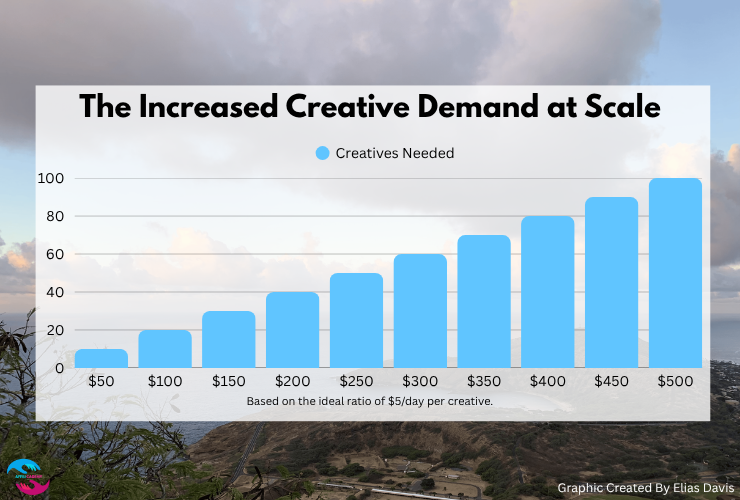
The first input is creative volume. You need new ads entering rotation consistently. A rough ratio I've found useful is one new creative for every $5 in daily ad spend. At $100 a day, you're introducing around 20 new creative variations per month. That keeps frequency down and gives the algorithm fresh material to test against new segments of the audience.
The second input is messaging alignment. As you scale and Andromeda moves into colder audiences, your creative needs to meet people earlier in their decision process. An ad optimized for someone who already knows your product and is deciding whether to buy won't land with someone who isn't sure they have a problem yet. You need different messages for different awareness level.
The third input is patience with the data. When CPA rises after a budget increase, the instinct is to kill the campaign and start fresh. Often the better move is to hold the budget steady for a few days, let Andromeda recalibrate against the new delivery volume, and watch whether performance stabilizes.
If you Still Aren't Confident
Then I can help you by givign you a free trial, where I will create all of your ads, manage the account, then, once it works, I get paid a profit split. Check it out with the link here:
https://affilicademy.com/10freeugc
The Honest Strategic Takeaway
Meta ads are not broken. It finds your most profitable audience first, delivers efficiently, and then keeps going until the budget runs out or the creative wears out. The job of the advertiser is to understand that cycle and build around it: feed the algorithm fresh creative, adjust messaging as audiences broaden, and stop treating performance drops as failures when they're often just signals that something structural needs to change.
The platform rewards operators who understand it. That's always been true, and nothing about the current environment has changed that.
FAQ
What is the Andromeda algorithm on Meta? Andromeda is Meta's ad delivery system responsible for predicting which users are most likely to complete a conversion event and prioritizing delivery to those users first. It builds probability maps based on creative signals, historical data, and user behavior, which is why early campaign performance often looks stronger than it does after extended run time.
Why do my Meta ads perform well at first and then decline? Early performance reflects Andromeda targeting the highest-intent segment of your audience — the people most likely to convert given your creative and offer. As those users are reached and the campaign continues, delivery expands into colder, lower-intent segments where conversion probability is lower. This is a structural feature of how the system works, not a sign that the platform has become unreliable.
What's wrong with Meta ads right now? The platform itself functions consistently, but competition has increased and CPMs have risen meaningfully over the past few years. A separate pressure is the volume of low-quality AI-generated content now competing in the same auctions. The issue isn't that the platform stopped working — it's that the average quality of advertising has declined while costs have gone up, which raises the bar for what it takes to stand out.
Are Meta ads dead? No, but they require more strategic input than they did when audiences were less saturated and CPMs were lower. Advertisers who rely on simple budget increases without addressing creative supply, messaging alignment, and audience awareness levels are more likely to see declining returns. The platform still produces strong results for advertisers running structured, well-developed systems.
Why does increasing my budget make my CPA go up? When budgets increase, Andromeda needs to fill more impression volume. To do that, it expands delivery into broader, colder audience segments. If your creative was optimized for a warm, product-aware audience, it will underperform when shown to people earlier in their decision process. The solution is to introduce creative designed for colder audiences alongside budget increases, not just push more spend into the existing setup.
What percent of people hate ads? Research consistently shows that somewhere between 70 and 80 percent of users report negative reactions to digital advertising. This is why ad creative that looks and feels organic performs disproportionately well — it doesn't trigger the automatic avoidance response that polished, obviously paid content does. For advertisers, this is a strong argument for investing in authentic, user-generated-style content rather than highly produced formats.
Ad Fatigue - full article
Ad fatigue occurs when an audience has seen the same creative repeatedly, leading to declining CTR and rising costs.
Algorithmic Optimization
The process by which Meta's delivery system learns from campaign data to show ads to users who are more likely to complete the desired action, such as a purchase or lead submission.
Broad Targeting - full article
An advertising configuration in which no manual audience filters — such as interests, demographics, or behaviors — are applied, allowing the algorithm to determine delivery based on its own user modeling.
CAC (Customer Acquisition Cost) - full article
CAC is the total cost required to acquire a new customer through advertising and marketing efforts.
Click-Through Rate (CTR) - full article
Click-through rate is the percentage of users who click on an ad after seeing it, indicating how compelling and relevant the ad is.
Conversion Rate - full article
Conversion rate is the percentage of users who take a desired action after clicking an ad, such as making a purchase.
Cost Per Acquisition (CPA) - full article
Cost per acquisition is the total cost required to generate a customer or conversion, combining traffic costs and conversion performance.
Cost Per Click (CPC) - full article
Cost per click is the average amount paid for each click, primarily influenced by CTR and CPM within the ad auction.
Cost Per Thousand Impressions (CPM) - full article
CPM is the cost to deliver 1,000 impressions, affected by competition, audience targeting, and engagement signals.
ICP- full article
Ideal Customer Profile, or the one person who your ads target specifically. This should be the perfect buyer for your product.
Learning Phase
The initial period of a Meta campaign during which the algorithm gathers data on user responses to optimize future delivery. Campaigns typically require a defined number of conversion events to exit this phase.
LTV (Lifetime Value)
LTV refers to the total revenue a customer generates over the duration of their relationship with a business.
LTV:CAC Ratio
This ratio compares customer value to acquisition cost and is used to determine whether marketing efforts are profitable.
LTGP (Lifetime Gross Profit)
LTGP measures the total profit generated by a customer after accounting for cost of goods sold over their lifetime.
Meta Ads - full article
Meta ads are paid advertisements run across platforms owned by Meta, including Facebook and Instagram.
Pixel Data
Behavioral data collected by Meta's tracking pixel installed on an advertiser's website, used by the algorithm to understand which types of users are most likely to convert.
ROAS (Return on Ad Spend) - full article
A performance metric calculated by dividing revenue generated from advertising by the total amount spent on those ads.